
Explore how mobile cardiac telemetry works, when it is used, how to choose the right MCT system, and why expert diagnostic interpretation is central to modern ambulatory cardiac care.
Mobile Cardiac Telemetry (MCT) is an advanced form of ambulatory cardiac monitoring that enables continuous, real-time ECG surveillance while patients go about their daily lives. Unlike traditional inpatient telemetry, which is limited to hospital settings, MCT extends cardiac monitoring beyond hospital walls, making it ideal for early detection of intermittent arrhythmias and post-discharge cardiac events.
This article explains what mobile cardiac telemetry is, how the MCT system works, when it is used, how to choose the right MCT system, and why it is especially valuable for high-risk patients and diagnostic service providers.
Mobile Cardiac Telemetry is a portable, real-time ECG monitoring system that continuously records a patient’s heart rhythm and transmits data wirelessly to a remote cardiac monitoring center. Patients wear lightweight ECG sensors or patches connected to a mobile transmitter that sends cardiac data via cellular networks.
Unlike Holter monitors, which store data for later review, MCT enables near real-time detection and reporting of clinically significant cardiac events. This allows healthcare providers to identify arrhythmias such as atrial fibrillation, ventricular tachycardia, or pauses as they occur.
MCT is widely used in outpatient cardiology, post-discharge monitoring, and remote diagnostic programs supported by specialized cardiac diagnostic labs.
Mobile cardiac telemetry systems rely on an integrated combination of wearable sensors, wireless connectivity, and centralized monitoring platforms.
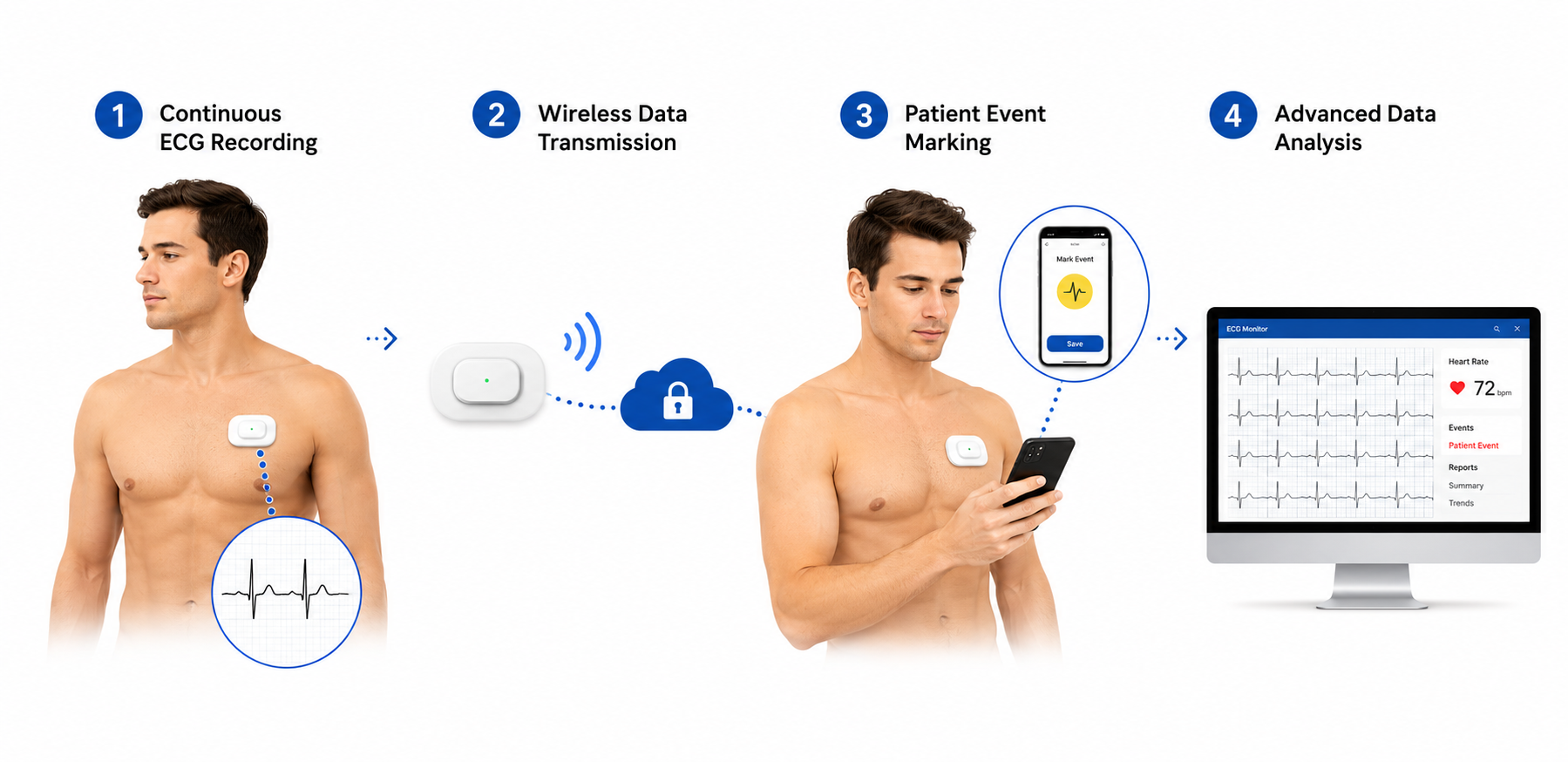
The process typically includes:
Electrodes placed on the patient’s chest continuously detect the heart’s electrical activity and convert it into ECG waveforms.
The ECG data is transmitted from the wearable device to a mobile transmitter or smartphone via Bluetooth. From there, the data is securely sent through cellular networks to a cloud-based telemetry platform.
At the monitoring center, trained cardiac technicians and clinicians review incoming data streams. Automated algorithms assist by flagging abnormal rhythms, while human experts validate events for accuracy.
When clinically significant arrhythmias are detected, alerts are generated and escalated to physicians. Structured reports are created and shared with the referring healthcare provider for timely clinical decision-making.
This real-time, mobile architecture is what differentiates MCT from both inpatient telemetry and retrospective ECG monitoring.
Mobile Cardiac Telemetry systems use lightweight, patient-friendly wearable devices designed for continuous ECG monitoring with minimal disruption to daily activities.
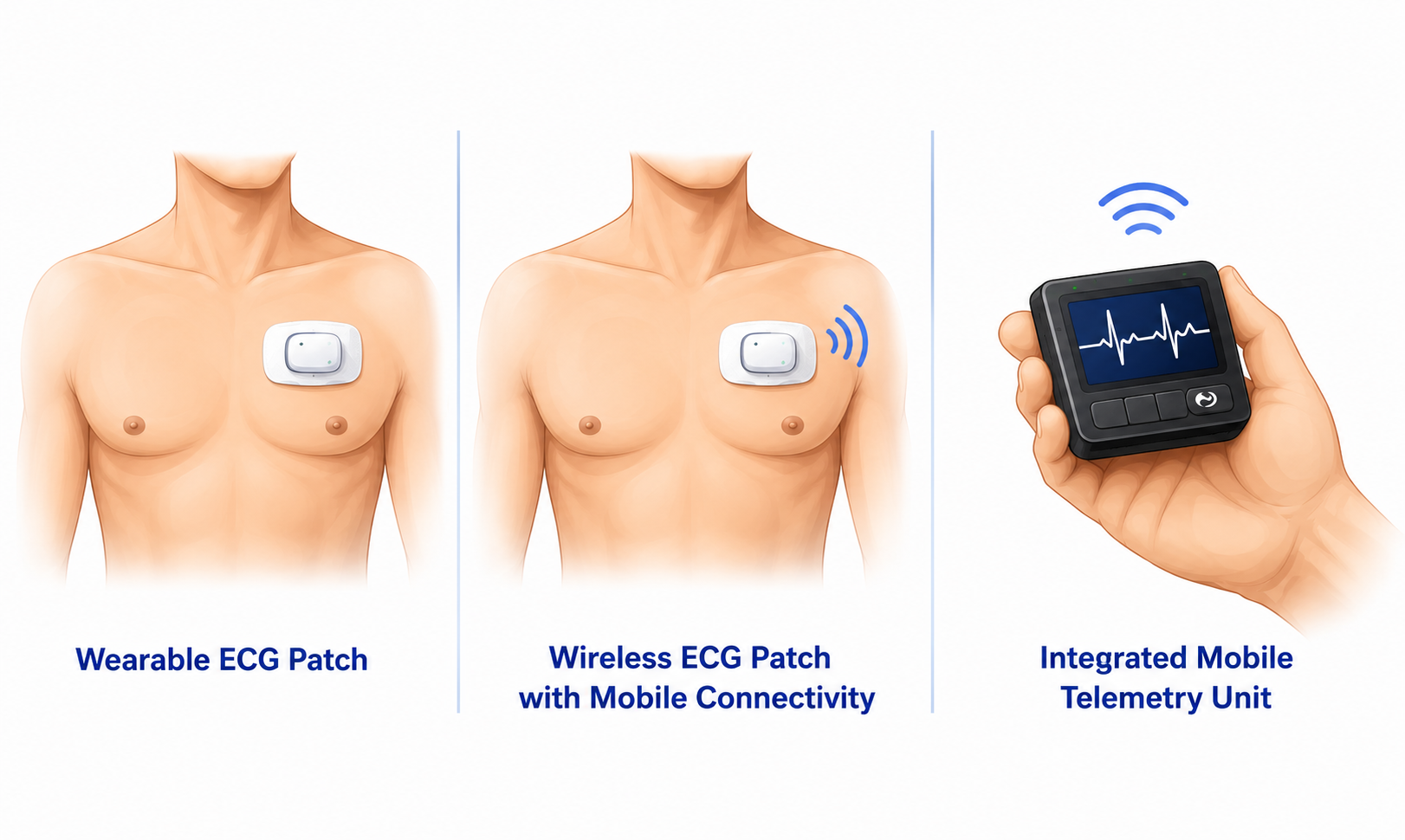
This design improves patient comfort and compliance while enhancing diagnostic yield compared to traditional Holter monitoring.
Mobile cardiac telemetry is typically prescribed when extended, continuous rhythm monitoring is required, but hospital admission is not clinically necessary.
Because patients remain ambulatory, MCT captures cardiac rhythm data during real-world activities, providing a more representative assessment of cardiac behavior.
Selecting an effective MCT solution requires evaluating both technology performance and diagnostic support infrastructure.
Many hospitals and cardiology practices partner with specialized diagnostic laboratories, such as Techindia, to support scalable MCT monitoring & reporting with 24/7 operational coverage.
Mobile cardiac telemetry provides significant clinical, operational, and patient-centered advantages particularly for individuals requiring close rhythm surveillance.
When combined with expert diagnostic interpretation, MCT significantly improves clinical confidence and patient outcomes.
While Mobile Cardiac Telemetry (MCT) continuously captures and transmits ECG data, its clinical value depends on timely and accurate interpretation. Techindia plays a key role in this process by providing expert MCT interpretation services that integrate seamlessly into existing cardiac monitoring workflows. Our device-agnostic approach allows us to support a wide range of MCT platforms without disrupting established clinical processes.
Built on a secure and scalable interpretation ecosystem, our AI-assisted workflows help prioritize clinically significant events, while experienced cardiac technicians validate findings and prepare structured, physician-ready reports. This combination of technology, clinical expertise, and standardized processes enables healthcare organizations to scale their MCT programs while maintaining consistent reporting quality and operational efficiency.







 Previous

