
Explore why some heart attacks miss standard ECG criteria, how the OMI paradigm is changing cardiac diagnosis, and why ECG technician expertise has never mattered more.
In cardiac care, the electrocardiogram remains one of the most trusted diagnostic tools. It is fast, widely available, and often the first test performed when a patient presents with chest pain. Yet every experienced ECG technician knows an uncomfortable truth: a normal-appearing ECG does not always mean the heart is safe.
Over time, many technicians witness cases where the ECG looks unremarkable, but the clinical story tells a different one. Patients arrive with symptoms such as chest discomfort, sweating, breathlessness, or unexplained fatigue, only for their ECG to lack the classic ST-segment elevation associated with a heart attack. Hours later, blood markers rise or angiography reveals a significant coronary blockage.
These situations are not rare exceptions. They represent one of the major limitations of traditional ECG interpretation and one of the biggest challenges in emergency cardiac care today.
Traditional ECG criteria focus heavily on ST-segment elevation during acute myocardial infarction. While this approach has saved countless lives, growing evidence suggests that some dangerous coronary occlusions do not initially meet traditional STEMI ECG criteria.
Research published through the National Library of Medicine found that traditional STEMI criteria may fail to identify a substantial number of occlusive myocardial infarctions during initial ECG evaluation.
These cases are increasingly recognized as occlusive myocardial infarctions (OMI) that present without textbook ECG changes. Because the electrical alterations are often subtle, including slight ST shifts, T-wave abnormalities, or complex multi-lead patterns, they can be easy to miss during real-world emergency care.
From a technician’s standpoint, this is particularly challenging. The ECG may be recorded correctly, with proper lead placement and minimal artifact, yet still fail to clearly reveal the severity of the underlying problem. The issue, in many cases, is not how the ECG was recorded, but how it is interpreted.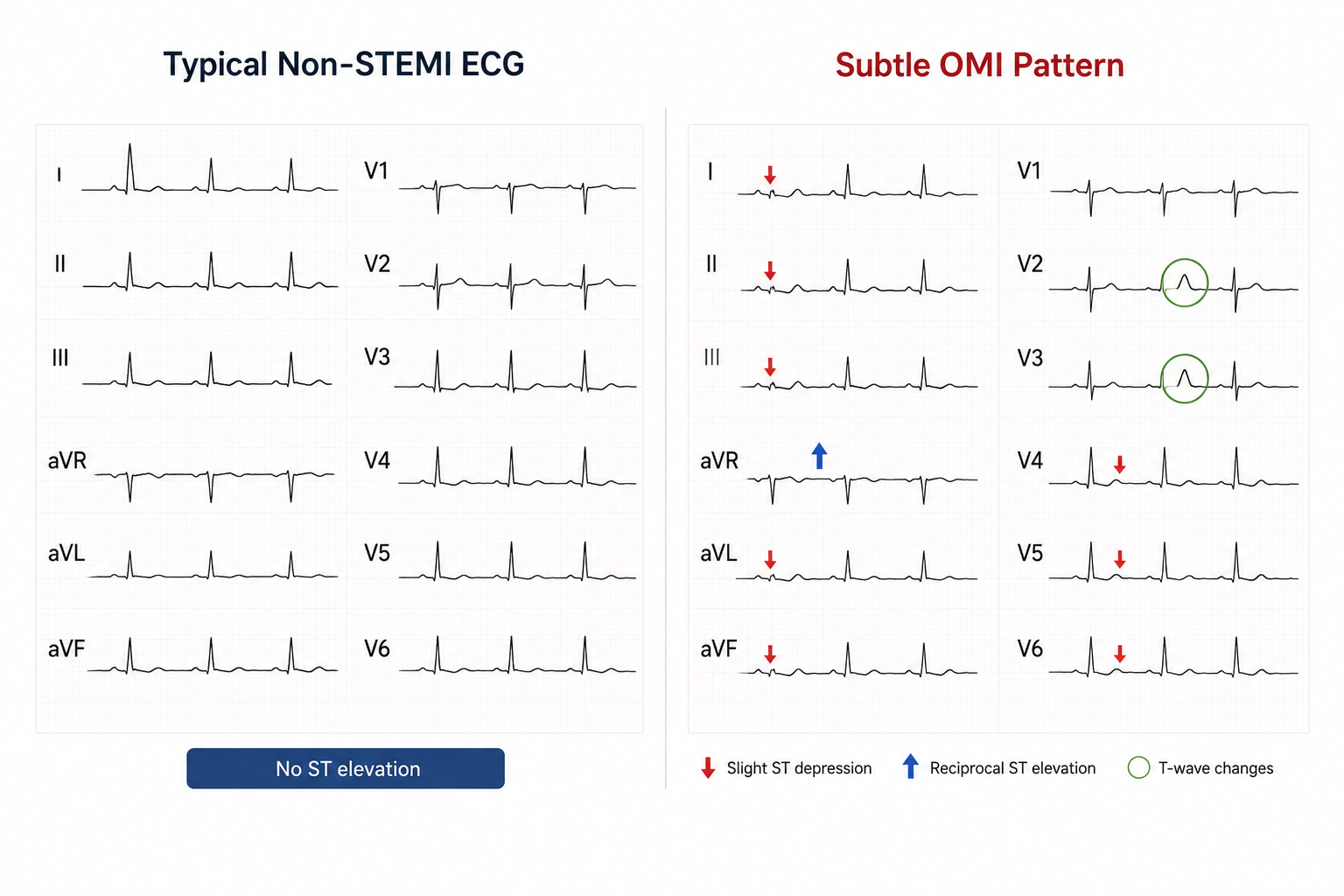
Recent advances in ECG interpretation have shifted attention from isolated findings toward broader pattern recognition across all twelve leads.
Modern interpretation approaches evaluate relationships between waveforms rather than searching only for single textbook features. This broader analysis helps identify subtle coronary occlusion patterns that may otherwise go unnoticed during high-volume emergency care.
These systems assess subtle electrical characteristics such as:
The growing OMI paradigm, discussed extensively by Life in the Fast Lane (LITFL), emphasizes recognizing acute coronary occlusion patterns beyond traditional STEMI criteria.
Additional reviews published in Annals of Emergency Medicine further describe how advanced ECG interpretation is improving recognition of occlusive myocardial infarction patterns that do not meet conventional STEMI thresholds.
Importantly, the ECG itself remains the same.
What has evolved is our ability to extract more information from it.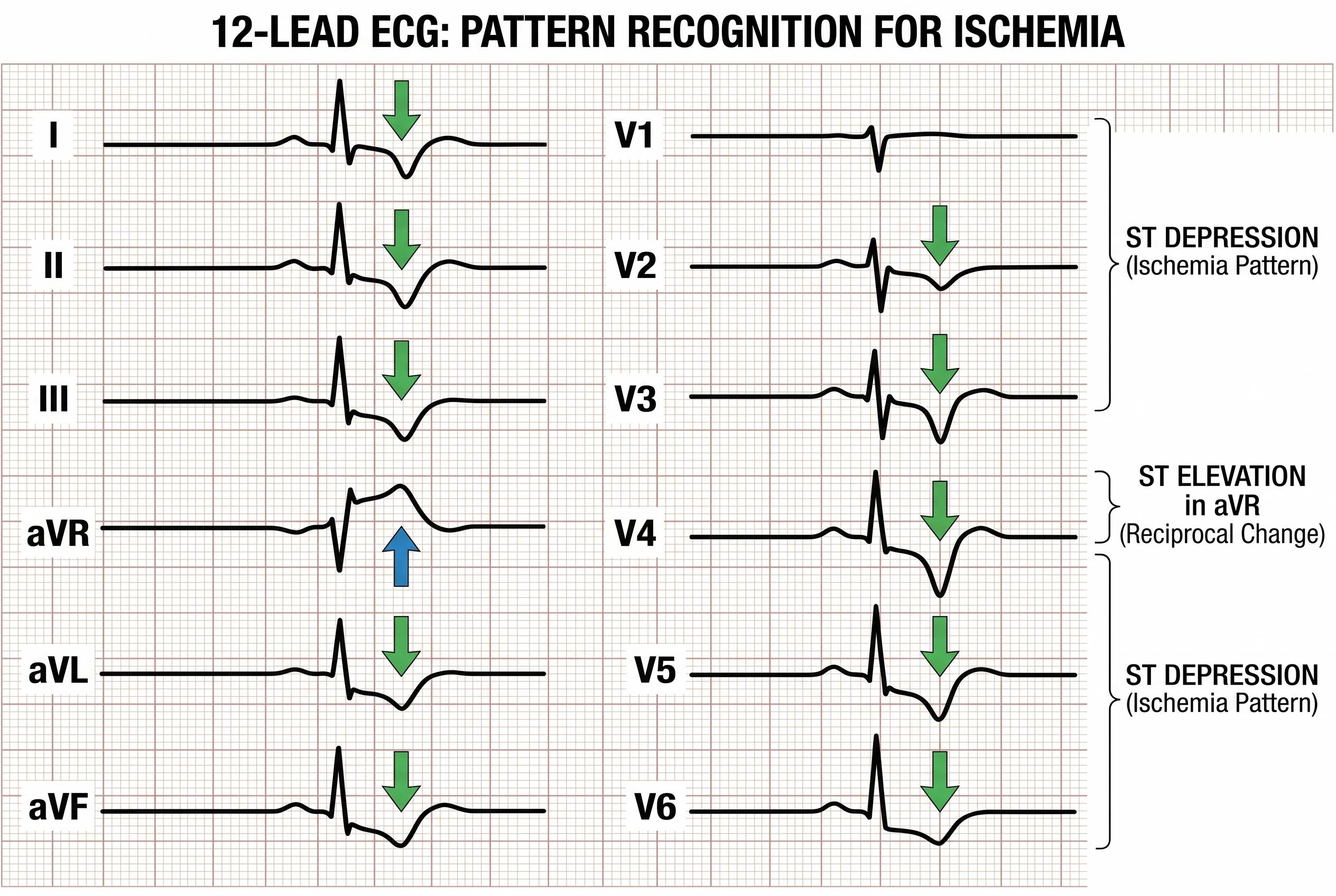
As interpretation becomes more advanced, ECG quality becomes even more critical.
No analysis method, whether manual or advanced, can compensate for poor signal quality. Incorrect electrode placement, motion artifact, baseline drift, or inaccurate patient data can significantly distort results.
For technicians, this reinforces a familiar principle:
In emergency settings, even small technical issues may obscure subtle ischemic changes that advanced interpretation systems are designed to detect.
Careful preparation, accurate lead placement, proper patient positioning, and artifact reduction are not routine details. They directly influence diagnostic reliability.
In practical terms, a clean ECG today carries even more diagnostic value than it did in the past.
From the technician’s perspective, daily workflow remains largely unchanged. Patients are prepared, leads placed, and ECGs recorded as they always have been.
What changes is what happens after the tracing is completed.
Enhanced interpretation systems can rapidly flag ECGs that may indicate high-risk coronary events, even when obvious ST elevation is absent. These alerts prompt faster clinical review and help prioritize patients who may require urgent intervention.
Clinical discussions published through The American Journal of Emergency Medicine note that traditional STEMI criteria may delay recognition of acute coronary occlusion in a significant number of patients, highlighting the need for deeper ECG interpretation strategies.
For technicians, this often translates into:
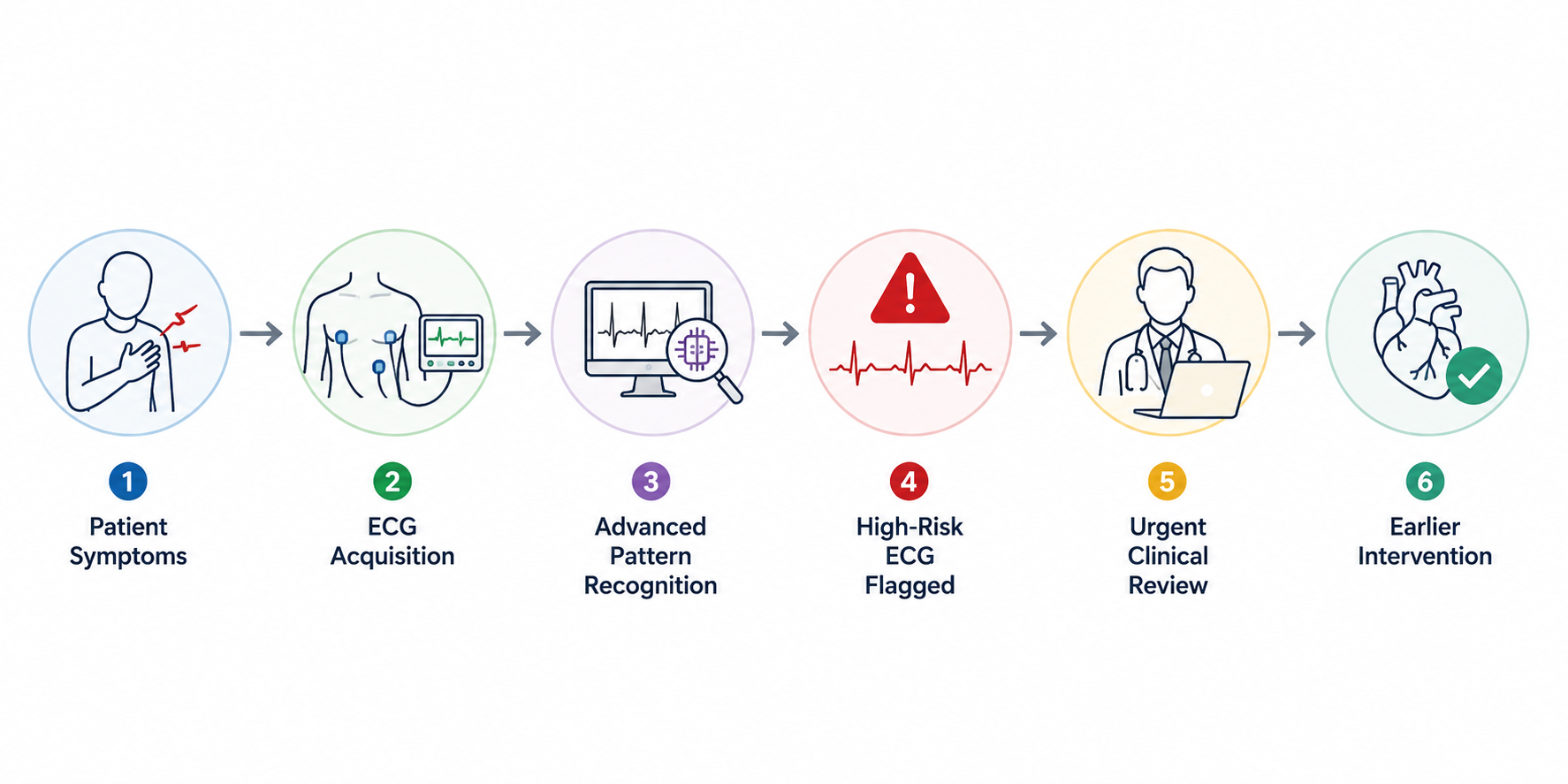
Institutions that have incorporated advanced ECG interpretation report improvements in early diagnosis of dangerous coronary events and reductions in unnecessary emergency activations. More importantly, patients with subtle but serious ECG findings are identified earlier and treated sooner.
For healthcare facilities looking to enhance diagnostic accuracy and reduce missed coronary occlusions, expert cardiac rhythm interpretation services can provide the specialized ECG analysis and clinical support needed to identify these challenging patterns.
From the technician’s seat, the benefit is visible on the floor. ECGs that once generated uncertainty now receive immediate attention. Instead of being reassured too quickly by a “non-STEMI” label, clinicians are prompted to look deeper when the electrical patterns suggest trouble.
Educational reviews from Taming the SRU note that STEMI-equivalent ECG patterns may account for 10–25% of coronary occlusions that do not initially meet traditional STEMI criteria.
It is essential to recognize that no ECG interpretation system, manual or advanced, operates in isolation.
ECG findings must always be correlated with:
Technology can support decision-making, but it does not replace human awareness and clinical judgment.
Clinical guidance discussed through Life in the Fast Lane Acute Coronary Syndromes Review emphasizes that ECG findings should always be interpreted within the full clinical context rather than independently.
Technicians remain responsible for recognizing poor recordings, repeating ECGs when necessary, and communicating concerns. If the tracing does not match the patient’s clinical condition, that discrepancy should never be ignored.
Far from diminishing the technician’s role, advances in interpretation increase their importance. ECG technicians are no longer simply recording tracings; they provide critical diagnostic data that guides urgent clinical decisions.
Expertise in:
Each of these directly influences diagnostic accuracy.
As cardiac care becomes more precise, technician skills become more visible and more valuable.
Emerging research published through ECG-SMART-NET Research Paper highlights how advanced ECG analysis systems are increasingly being designed to recognize complex multi-lead coronary occlusion patterns that may be difficult to identify visually during emergency care.
The ECG remains a cornerstone of cardiac diagnosis, but it is not infallible. Some heart attacks do not announce themselves with dramatic ST-segment elevation. Recognizing these cases requires careful ECG acquisition, thoughtful interpretation, and an appreciation of subtle electrical patterns.









 Previous
